
Common Problems, Simple Checks, and When to Call a Dental Equipment Technician
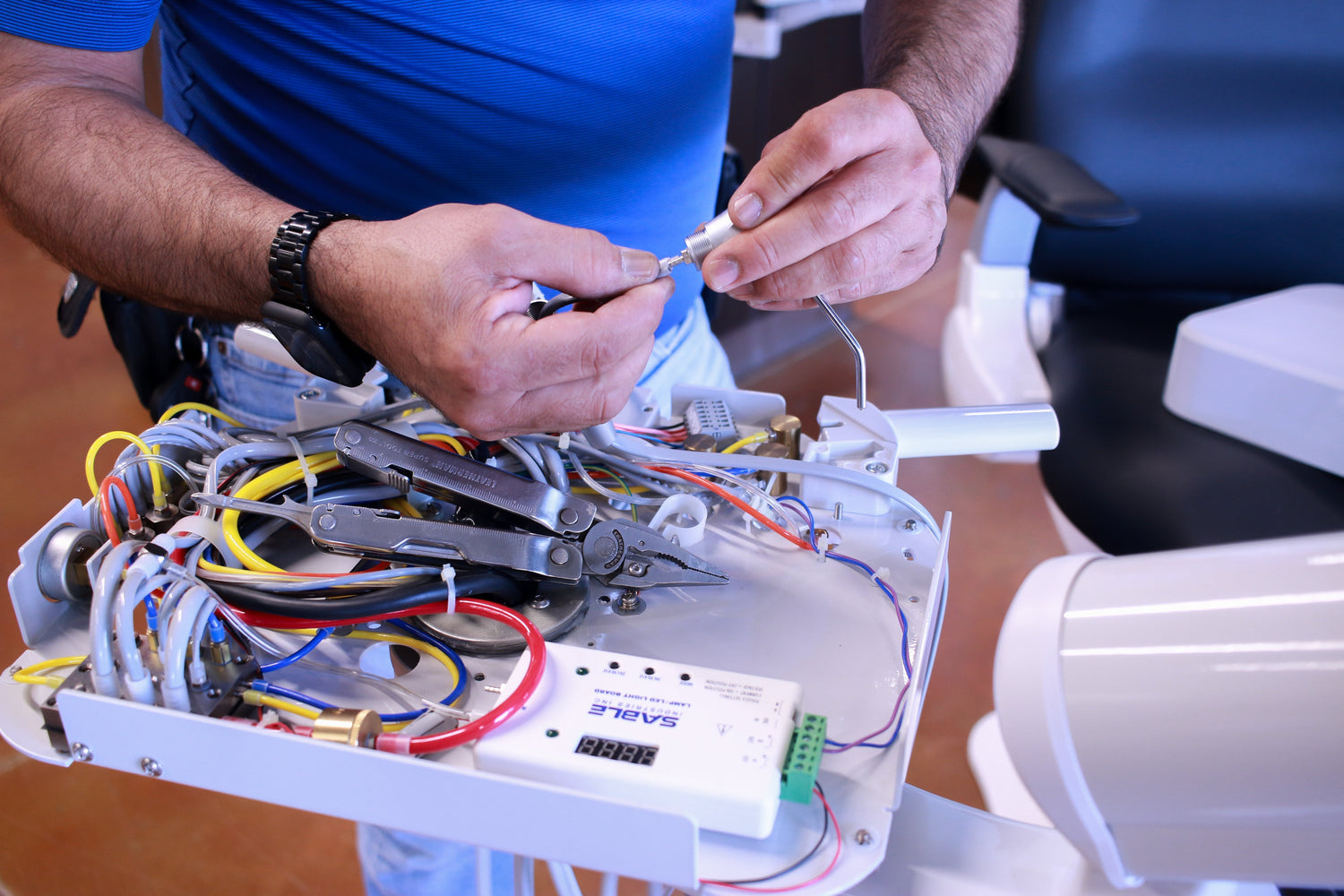
Dental equipment is a significant investment, and many issues require specialized tools and training to diagnose safely. While there are a few simple checks your team can perform before scheduling service, most repairs should be left to a qualified dental equipment technician.
Below are some of the most common chair and delivery system issues we encounter in the field and the basic checks you can safely perform.
Dental Chair Won't Move
A chair that suddenly won't move can disrupt your schedule, but the cause is often something simple.
Why This Happens
Dental chairs are designed with several built-in safety features. One of the most common is the kick plate safety switch located near the base of the chair. If something presses against this plate, the chair may stop moving or beep to prevent damage. We often see this after routine cleaning, when the kick plate has been bumped or shifted slightly.
Before Calling for Service
✔ Verify the chair is plugged in. Housekeeping staff or other personnel can occasionally disconnect the power cord while cleaning around the operatory.
✔ Confirm the chair's main power switch is turned on.
✔ If the chair beeps when you press the controls but does not move, the kick plate safety switch may be activated. Sometimes gently repositioning or "jiggling" the kick plate will allow it to reset.
Call a Technician If
- The chair still will not move after these checks.
- The chair does not power on.
- The chair moves erratically.
- You hear unusual mechanical noises.
Attempting to disassemble the chair or access internal components is not recommended.
Water Leaking From the Delivery Unit
Water leaks are one of the most common service calls. Identifying where the leak occurs can help narrow down the problem.
Why Identifying the Leak Matters
Water leaks can originate from several different components, including the handpiece, coupler, delivery tubing, syringe, or internal valves. Determining whether the leak follows the handpiece or remains at a specific delivery position helps narrow the diagnosis and can save both time and repair costs.
Before Calling for Service
✔ Determine whether the leak is continuous or only occurs while using a handpiece.
✔ Check that the self-contained water bottle is tightened properly and is not cracked or leaking.
✔ If the leak occurs from only one handpiece position:
- Move the handpiece to another delivery position (if compatible).
- Try a different handpiece in the original position.
- If available, swap the coupler as well.
This simple process helps determine whether the issue follows the handpiece, the coupler, or stays with the delivery unit.
Many handpiece couplers simply require replacement O-rings, which many dental offices keep in stock and can replace themselves.
Call a Technician If
- The leak continues regardless of the handpiece or coupler used.
- Water is leaking from inside the delivery unit.
- Multiple handpiece positions are affected.
- The source of the leak cannot be identified.
No Water to the Handpiece
A loss of water spray can usually be narrowed down with a few quick checks.
Before Calling for Service
✔ Verify the delivery system is powered on.
✔ Confirm the air compressor is operating normally.
✔ Check that the self-contained water bottle contains water and is properly installed.
✔ Verify the air/water syringe still has water.
✔ Test another handpiece position to determine whether the issue affects only one instrument.
✔ Some older delivery systems have a city water shutoff valve that may have been accidentally turned off. Most modern offices using self-contained bottle systems no longer use this valve, but if your unit has one, verify that it is open.
Call a Technician If
- No water is available from any handpiece.
- The syringe also has no water.
- Water pressure is inconsistent.
- None of the above checks resolve the issue.
Air/Water Syringe Problems
The air/water syringe is used constantly throughout the day, making it one of the most common components to require maintenance.
Common Symptoms
- Constant dripping
- Weak water spray
- No air
- No water
Before Calling for Service
Many syringe issues are caused by worn O-rings inside the syringe tip or valve assembly. Replacing these O-rings is routine maintenance that many dental offices perform themselves.
Call a Technician If
- Replacing the O-rings does not resolve the problem.
- The buttons stick.
- Air and water do not function correctly after replacing the O-rings.
Preventive Maintenance
Many emergency service calls can be avoided through regular preventive maintenance.
We recommend:
- Reporting even small leaks as soon as they are noticed.
- Replacing worn O-rings before they begin leaking.
- Inspecting handpiece couplers regularly.
- Keeping water bottles clean and in good condition.
- Scheduling annual preventive maintenance inspections by a qualified dental equipment technician.
Small problems rarely fix themselves and often become more expensive repairs if left unaddressed.
When Should You Call a Technician?
If the issue cannot be resolved with the simple checks above, it is generally time to call a qualified dental equipment technician.
Dental delivery systems combine compressed air, water, electricity, and precision pneumatic components. Attempting repairs without the proper training can damage the equipment, create safety concerns, or increase repair costs.
At Hewitt Dental, our factory-trained technicians have been helping dental offices throughout Central Texas keep their equipment operating reliably since 1979.
